Internet Marketing has grown phenomenally over the last few years
but the shift has quite clearly moved to a market that is driven
by the consumer and that is no longer dictated by journalists
and corporates. Online consumers are responding more favorably
to non-intrusive, relevant and socially attractive campaigns and
have quite frankly had enough of intrusive, forced online advertising
campaigns.
The top 10 Internet marketing tips for 2008 are:
1. Optimize your website's content
2. Create a content development strategy for your website
3. Invest in a paid search (pay-per-click) campaign
4. Publicize your website through article marketing
5. Develop a social media marketing strategy
6. Create a Company Blog
7. Experiment with video marketing
8. Engage your audiences with web widget marketing
9. Discover the benefits of mobile marketing
10. Create an effective email marketing strategy
Let's look at each of these in more detail:-
1. Optimize Your Website's Content: First and foremost,
get your website content right. Make sure it is easily read by
both humans and search engines. An essential variable applied
by Search Engines in the way in which they rank websites is based
on the relevancy of the content that the search engine is indexing.
2. Create a Content Development Strategy for Your Website:
In addition to optimizing the existing content on your website,
it is essential that you develop a strategy to continuously grow
your website's content on an ongoing basis. All new content should
be written specifically with the web reader in mind and should
also be optimized for the search engines.
3. Invest in a Paid Search (Pay-Per-Click) Campaign: When
you pay for traffic (visitors) that click on your advertisements
that are being advertised on search engines, this is called pay-per-click
or search engine advertising. Paid search allows you to quickly
leverage search engine traffic by bidding for keywords that are
related to the products or services that you promote and sell
on your website. Paid search advertising is particularly beneficial
to companies who are not yet well ranked on search engines through
natural search.
4. Publicize Your Website Through Article Marketing: Article
marketing is regarded by Internet marketing experts as one of
the most effective promotional methods to publicize your website
and to grow the number of back links (incoming links) to your
website content. To ensure ongoing awareness, articles should
be submitted to suitable article directories, content publishers,
article announcement lists and content syndication (RSS feeds).
Each article should be published on your website first and should
include a bookmark button to encourage social bookmarking.
5. Develop a Social Media Marketing Strategy: Studies
show that by the end of 2007 more than 60% of top global companies
will have had some form of social media marketing strategy in
place. Corporates and small business owners should create a clear
social media marketing strategy as part of an integrated communications
and marketing strategy. Social Media has become an essential component
of online marketing and search engines are adjusting their rankings
to include search personalisation. One of the effects of the social
media revolution is an exponential growth in the amount of content
online.
6. Create a Company Blog: In the past, corporates have
focused marketing and communications efforts on becoming faceless.
This has changed significantly. Where the online consumer has
become very much in control, companies will no longer be able
to connect with their customers in a meaningful and emotional
way without having a personality. More and more companies are
starting to realize the significance of establishing a company
personality and we are starting to see more Corporate Blogs coming
alive. Business Blogging will continue to become more lucrative
as more and more people look to new media such as Blogs and social
websites for insight.
7. Experiment With Video Marketing: There is tremendous
power and revenue-generating potential in Video Marketing. With
the rapid ongoing growth of YouTube's traffic in addition to the
emergence of Internet Television websites, streaming video is
dominating the international web and marketers are quickly scrambling
to capitalize on this exciting channel. As companies seek to simplify
video sharing, video marketing will become more interactive which
could have huge implications for Affiliate marketing.
8. Engage Your Audiences With Web Widget Marketing: Widgets
have made significant strides as an accepted marketing technique
in recent months. Many new Blog oriented services are launching
Widgets providing businesses with the opportunity to quickly introduce
their services and new products to audiences.
Web Widgets are small applets that live in HTML and provide miniature
versions of a specific piece of content outside of the primary
web site. Web Widget Marketing is not only an exciting new marketing
technique; it is fast becoming one of the leading brand-building
marketing strategies for businesses advertising online.
9. Discover the Benefits of Mobile Media Marketing: Mobile
media marketing has continued to grow at a meteoric pace as many
web companies recognize the huge potential in mobile marketing.
As new technologies emerge and standard websites are converted
to ones that can easily be accessed by mobile devices, companies
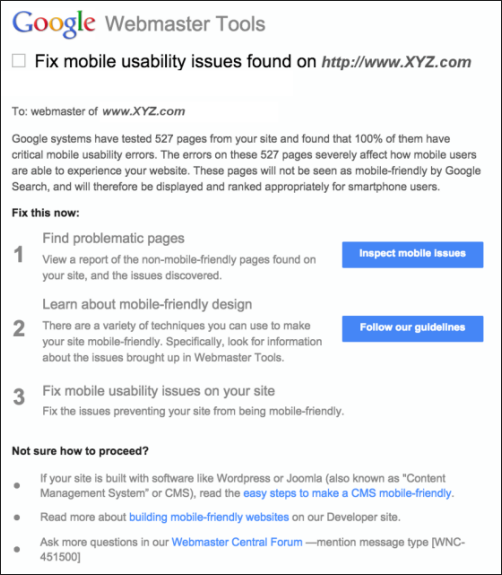
will need to ensure that their websites are mobile-friendly. This
leads the way for new and innovative opportunities to provide
the consumer with improved brand and marketing experiences.
10. Create an Effective Email Marketing Strategy: Introduce
an effective Email communications strategy as part of your marketing
strategy to grow your existing customer base and to expand your
client base significantly through permission marketing and regular
targeted communications. Engaging your customers with relevant,
targeted information when, where, and how they want it is crucial
to marketing success. By combining technological advances with
tried-and-tested best practices, the future still looks bright
for email marketers.
To conquer commercial combat, a significantly powerful Internet
presence, supported by a brilliant E-Marketing Strategy, is paramount
to ensuring that you remain competitive, grow revenue and magnetise
your customers!
The TITLE Element - TITLE elements, (commonly called TITLE
Tags), are one of the most important factors that search engines
"look" at when it comes to determining the relevancy
of a web page against a search query. In their ranking algorithms,
nearly all the major search engines attribute a high relevancy
weight to the content of the TITLE tag.
In the HTML code of a web site, TITLE tags look like this one
(for a fictional florist): <TITLE>Miami Florists - beautiful
floral creations made to order.</TITLE>
The META Description Tag - META Description Tags are designed
to describe the content of web pages. Search engine robots will
gather up this information when indexing web sites and often use
it when referencing web pages in the search listings. While not
all search engines continue to utilize the META Description Tag,
a majority of search engines rely on the content of this tag (together
with a site's visible content) to provide information about a
site that they can match with search queries. It is therefore
important for webmasters to include keywords and phrases in the
META description that they would expect searchers to use to find
their site content.
In the HTML code of a web site, a sample META Description Tag
looks like this: <META name="description" content="Miami
Florists create beautiful floral bouquets, arrangements, tributes
and displays for all occasions, including weddings, Valentines
Day, parties and corporate events. Deliveries throughout Florida.">
You can view the META Description Tag of a site by viewing the
source code.
The META Keywords Tag - While only indexed by a small
handful of search engines these days, the META Keywords Tag is
still worth including within a site's HTML code, if only to provide
those search engines with as much information as possible about
site content.
In the HTML code of a web site, a sample META Keywords Tag looks
like this:
<META name="keywords" content="flowers, roses,
weddings bouquets, florists, floral arrangements, flower deliveries,
Valentines Day gifts, Christmas decorations, Mother's Day, tributes,
wreaths, clutches, sprays, in sympathy, funerals, corporate functions,
parties, floral displays, Miami, Florida">
The current lack of support for the META Keywords Tag by so many
search engines can be attributed to increasing sp@m abuse by ignorant
webmasters. These webmasters thought the keyword tag was a good
place to stuff hundreds of keywords in the hope of achieving a
higher search ranking, thereby "sp@mming" the search
engines with useless, non-relevant data. This prompted many search
engines to filter out the META Keywords Tag or lower its importance
within the ranking algorithm.
You can view the META Keywords Tag of a site by viewing the source
code.
Create Your Optimized Tags - Now, it's time to create
optimized TITLE and META Tags for your site. Let's start with
the TITLE Tag for your Home Page.
Create Your TITLE Tag ... Take the list of target keywords and
phrases that you want your web site to be found for in search
engines. You should have already allocated them to the appropriate
pages of your site to be optimized. I use a spreadsheet for this
purpose, but you should use whatever works for you.
Now, open a text file in Notepad or something similar. If you
like, you can use an existing sample TITLE Tag as your template.
Let's say our existing Title is:
<TITLE>Miami Florists - beautiful floral creations made
to order.</TITLE>
Now take your list of keywords for the home page and put them
in order of importance, with the ones you want to rank highest
for at the top. For our fictional florist these are:
- florists Miami
- florists Florida
- wedding bouquets
Now you are simply going to combine these keywords into a sentence
or short blurb so they make the best use of the keyword real estate
available. Always try to use as few words as possible in your
Title Tags, because each additional keyword dilutes the ranking
relevancy of all the others. In this case, I would initially combine
the keywords as follows:
Florists in Miami Florida specializing in wedding bouquets
Notice how I've got the keywords in the correct order for the
search queries? I've tried to include the most important keywords
towards the start of the tag. There was no need for me to repeat
the keyword "Florists" more than once because the sentence
I've used covers both "Florists Miami" and "Florists
Florida". Most search engines will ignore "in"
as a stop word, so it shouldn't matter that we've included it.
Although it's tempting to put a comma between Miami and Florida,
on some search engines commas act as a keyword separator, so we
don't want to use one here because we don't want "Florists'
and "Florida" to be separated.
Now, there is just one problem with this draft Title. Our 3rd
keyword phrase 'wedding bouquets" is right at the end of
the sentence, meaning it may lose some relevancy weight (search
engines consider keywords closer to the start of the tag as the
most important). How do we fix this? Let's try this:
Florists in Miami Florida - wedding bouquets a specialty.
We don't want to use a period after "Florida" for the
same reason that we don't use a comma. But a hyphen should not
make a difference to search engines yet still allow the sentence
to read logically to a searcher. So now we have our three target
keyword phrases covered in a very short space. In fact, the above
sentence now covers the following keyword combinations:
- florists Miami
- florists Florida
- florists in Miami
- florists in Florida
- florists in Miami Florida
- wedding bouquets
- Miami wedding bouquets
- Florida wedding bouquets
When integrating your keywords, remember that their order is
important. If you want your site to have the best possible chance
of being found for the search query "Miami florists",
you need to put the keywords in that exact order and not "florists
Miami", because the spider searches the keywords in exact
order. Unless they are stop words, also try to avoid using extra
words between your keywords. If you wanted to, you could integrate
your company name into the Title tag, but (unless your company
name is super short or includes a keyword), don't sacrifice a
keyword to do so. Instead, try placing the company name at the
end of the tag so you can be sure that all your important keywords
will be indexed first. In the case of our florist, let's imagine
their name was Funky Florists. We could easily accommodate the
name into the beginning of our optimized Title as follows:
<TITLE>Funky Florists in Miami Florida - wedding bouquets
a specialty.</TITLE>
It may reduce the keyword relevancy impact very slightly, but
including your company name enables you to brand your page, which
may be more important to you. The content of the Title Tag is
also what gets saved in a person's Favorite's list when they bookmark
your site, so having your company name included is worth considering
from a branding perspective.
Quite a few clients of Rich's Web Design have asked me, "What
does my weekly ranking chart mean?" "You send it every
Monday, but I never can understand it." Here is the best
explanation:

The VERY first thing I look at are the two sections
"Moved Up" & "Moved Down" 1
. This week, 2 of the phrases "moved up" in the rankings
and 4 "moved down". If any of these phrases were "dropped"
or "added" then the numbers would show directly below.
The "Visibility Score" and the "Visibility
Percent" 2 are calculations
based on points given to higher ranking phrases and the overall
total. A position of 1 = 30 pts., 2 = 29 pts ... A ranking of
30 = 1 point, etc. I would NOT worry
about these numbers!
The actual rankings 3
are the meat of the chart. This shows the actual rankings for
your individual phrases / words for this day for each of the 4
major search engines. If your phrase went UP from last weeks report,
then a green up arrow
will
show. For example, the two phrases above, "Kernersville Accounting"
for both AOL & Google, went up this week. 1
1
means that it is NOW #1 and moved up by 1 place. If your phrase
went DOWN, then a red
will show. For example, this site went down on Yahoo for "Kernersville
Accountant". 6
3 means that this week it ranks #6; It moved "down"
3 places. Last week it was #3.
CONCLUSION - As you know, these phrases are
constantly changing in the rankings. Some UP ... some DOWN. Even
if a phrase shows "dropped"
,
chances are good that next week, it will be added
back in. If your site consistently"drops" in rankings,
or many words are "dropped"
and are not added
the next week, then we need to work on your site. CALL
ME!! Chances are good that we need either FRESH content or MORE
incoming links