|
10 Life Lessons - Not Taught in High School
Lesson #1: "Life is not fair -- get used to it."
Lesson #2: "The world won't care about your self-esteem. It will expect you to accomplish something before you feel good about yourself."
Lesson #3: "You will not make $50,000 a year right out of high school. You won't be a vice president with a car phone until you earn both."
Lesson #4: "It you think your teacher is tough, wait until you get a boss at work."
Lesson #5: "Flipping burgers is not beneath your dignity. Your grandparents had a different word for burger flipping -- they called it opportunity."
Lesson #6: "If you mess up, it's not your parent's fault, so don't whine about your mistakes, learn from them."
Lesson #7: "Before you were born, your parents weren't as boring as they are now. They got that way from paying your bills, cleaning your clothes, and listening to you talk about how cool you are. So, before you save the rain forest from the parasites of your parents' generation, try cleaning your own room."
Lesson #8: "Your school may have done away with winners and losers, but life has not. Some schools have abolished failing grades and will give you as many times as you want to get the right answer. This doesn't bear the slightest resemblance to anything in real life."
Lesson #9: "Life is not divided into semesters. You don't get summers off and very few employers are interested in helping you find yourself. Do that on your own time."
Lesson #10: "Television is not real life. In real life, people actually have to leave the coffee shop and go to jobs."
More SEO (Search Engine Optimization) Tips!
from
 Move over, banner ads and pop-ups. Make room for search. - That's the new marketing mantra these days, as more and more companies doing business online find that the best way to reach prospective customers is through their Web searches.
After all, most consumers looking to make a purchase online start with a keyword search. So why splatter ads all over the Internet -- and risk having most of the people they reach treat them as nothing more than an annoyance -- when you can focus on people who show an interest in what you're selling and who are getting ready to buy.
"The difference between this and any other form of advertising is the customer is looking for you," says Heather Walls, an Internet content specialist at Lippincott Williams & Wilkins. The Philadelphia-based publisher of medical information started using search-related marketing late last year, and has since scaled back on banner ads and print promotions and stopped doing direct-mail campaigns. "With this, you know people searching on the Internet are looking for you and what you have to offer," Ms. Walls says. "That makes them twice as likely to buy from you" as consumers reached through any other marketing medium, she has found.
Results like that are fueling rapid growth in the industry. Spending on paid listings and paid inclusion -- two of the three forms of search-related marketing -- more than doubled in the U.S. from $419 million in 2001 to $1.19 billion last year, and is expected to grow 48% this year to $1.77 billion, according to brokerage firm U.S. Bancorp Piper Jaffray. Globally, such spending is expected to grow fivefold to about $7 billion a year by 2007 from $1.4 billion last year, says Safa Rashtchy, an analyst at the Minneapolis-based firm. Outside the U.S., he expects tenfold growth to $2 billion in 2007 from about $200 million this year.
For all its promise, though, search-based marketing can be confusing for companies new to the game. And figuring out which of the three approaches to use -- paid listings, paid inclusion and search-engine optimization -- takes some work.
Tip Of The Month: Content Matters
Rule #1 Content is King
Rule #2 Content is King
Rule #3 Re-read rules number 1 and 2.
Searchers are using more words in queries - (May 8 2003) OneStat reports that a majority of Web searchers now use two or three word phrases in search queries. Searchers are clearly beginning to learn that more keywords mean more targeted results.
According to OneStat the distribution of queries according to the number of words included is as follows:
2 word phrases 29.22%
1 word phrase 24.76%
3 word phrases 24.33%
4 word phrases 12.34%
5 word phrases 5.43%
6 word phrases 2.21%
7 word phrases 0.94%
In order to rank prominently for a keyword phrase it is very important that the phrase appears in the content of the website pages. When a Search Engine algorithms calculates rankings for keywords, they look for keyword relevancy in the content. A list of keywords in your meta tags that do not appear in the actual body text are worthless. Well written copy with a keyword focus is a vital step for Natural Search Optimization.
Search-Engine Optimization - Mr. Sullivan, the SearchEngineWatch.com editor, defines search-engine optimization as "the act of altering your site so that it may rank well for particular terms" used in Web searches. The ideal is to get your site to the top of the results of a Web search, or at least on the first page of results.
One relatively easy change to make is to use simple terms or words that everyone would understand to describe your products -- and therefore be more likely to use in a search -- instead of industry jargon. Experts suggest doing research on keyword use to find out what terms Internet users are searching for, and then altering the content of your site to make sure it appears as a match for more of those words.
Changes below the surface, in a Web site's software, also can help the site achieve a higher listing in search results.
Firms like iProspect, help companies optimize their Web sites. The firm was hired last August by Aubuchon Hardware, a family-owned chain of 135 hardware stores based in Westminster, Mass. The hardware company had been paying for more than 4,000 keywords in paid listings. That was working well, says William E. Aubuchon IV, the company's Web manager. But the company wanted to be able to add products to its online store and alert prospective customers of their availability through search results without having to buy more keywords through paid listings. Under iProspect's direction, Aubuchon began to highlight new products, such as cordless drills, on its Web pages when they were added, to ensure that search engines picked them up.
Two months after it hired iProspect, Aubuchon Hardware's online sales volume had more than doubled.
One important advantage of this approach is that it allows companies to show up, and prominently, in Google's results. Since Google doesn't have a paid-inclusion program, the only options open to companies that want to ensure display in Google's search results are search-engine optimization or paid listings. A word of warning, though: Google will eliminate from its database companies that it believes are using unscrupulous methods to improve their rankings in search results. So familiarize yourself with Google's standards (spelled out at www.google.com/webmasters/guidelines.html) and be sure your strategy complies with them.
Search-engine optimization also has had to overcome some bad publicity from disgruntled customers who wondered what they got out of it. "It was thought of as more of a black art," acknowledges Jill Whalen, owner of HighRankings.
Search-engine optimizers and marketers advise merchants considering this option to take the same precautions they would with any service provider: Ask for references and interview them. Spend time interviewing the firm you want to hire, to understand what it offers and to communicate what your expectations are.
"Google Webmaster Guidelines" - from 
Following these guidelines will help Google find, index, and rank your site, which is the best way to ensure you'll be included in Google's results.
- Make a site with a clear hierarchy and text links.
- Offer a site map to your users with links that point to the important parts of your site.
- Create a useful, information-rich site
- Think about the words users would type to find your pages
- Try to use text instead of images to display important names, content, or links.
- Check for broken links and correct HTML
- Keep the links on a given page to a reasonable number (fewer than 100).
- Submit your site to relevant directories such as the Open Directory Project and Yahoo!.
- Don't deceive your users
- Avoid tricks intended to improve search engine rankings.
- Don't participate in link schemes
- Don't use unauthorized computer programs to submit pages
- Avoid hidden text or hidden links.
- Don't employ cloaking or sneaky redirects.
- Don't send automated queries to Google.
- Don't load pages with irrelevant words.
- Don't create multiple pages, subdomains, or domains with substantially duplicate content.
- Avoid "doorway" pages created just for search engines
Psychology of Color
from
 Choose colors that match your mission and the message you wish to convey.
Of all the forms of non-verbal communication, color is the most instantaneous method of conveying messages and meanings. Before humans learned to appreciate the aesthetics of color, there were far more practical aspects of communications with color. Our very survival depends on the ability to identify necessary objects and/or warnings signs whether they are animal, vegetable or mineral and color is integral part of the identification process.
Among other uses, color stimulates and works synergistically with all of the senses, symbolizes abstract concepts and thoughts, express fantasy or wish fulfillment, recalls another time or place and produces an aesthetic or emotional response
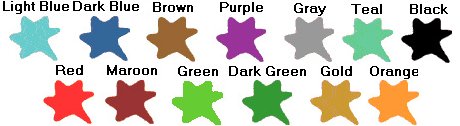
Red
evokes aggressiveness, passion, strength, vitality.
Pink
evokes femininity, innocence, softness, health.
Orange
evokes fun, cheeriness, warm exuberance.
Yellow
evokes positively, sunshine and cowardice.
Green
evokes tranquility, health, freshness.
Blue
evokes authority, dignity, security, faithfulness.
Purple
evokes sophistication, spirituality, costliness, royalty and mystery.
Brown
evokes utility, earthiness, woodsiness and subtle richness.
White
evokes purity, truthfulness, being contemporary and refined.
Gray
evokes somberness, authority, practicality and a corporate mentality.
Black
evokes seriousness, distinctiveness, boldness and being classic.
There is no better place to gauge the effectiveness of color than in the marketplace where it is a vital key in communicating a positive, enticing and irresistible image to a product. Often called the "silent salesperson," color must immediately attract the consumer's eye, convey the message of what the product is all about, create a brand identity and, most importantly, help to make the sale. At the very least (as on a Web page or in a print ad), it must create enough interest or curiosity to induce the would-be buyer to find out more about the product (or service).
Much of the human reaction to color is subliminal and consumers are generally unaware of the pervasive and persuasive effects of color. Psychological effect is instantaneous as color stimulates the senses and exerts its power of suggestion. The power that color wields is seen at every level of communication: in corporate identification and logos, signage, advertising on television, billboards, in print media and packaging, on the computer and at point-of-purchase.
As an example of color's power in marketing (and one we can all relate to) as consumers speed down the market aisles, their eyes rest on a package for approximately .03 seconds. In that blinking-of-an-eyelash timing, the package must rivet the observers' eyes, inform them of the package contents and, more importantly, appeal to their psyches.
The 7 Major Steps For Improving A Web Site
 What are these steps?
#1) Conduct Field Studies -- Many designers are struggling with "Who are my users?" and "Why do they come to my design?" Field studies can provide answers that aren't available other ways.
#2) Utilize Usability Testing -- Testing can provide teams with a wealth of information about what's happening with the specific portions of the design. Info that can't be learned any other way!
#3) Build Design Patterns -- Take the knowledge gained from field studies and usability testing and embody it in design patterns that the entire team (and future members) utilize as powerful resource.
#4) Separate Style from Content -- Too many teams are using implementation techniques that require major changes to the code for every simple stylistic design enhancement. Tools like XHTML and CSS can make the designer's life tremendously easier.
#5) Write for the Medium -- Writing for the screen is different than writing for paper. Writing to encourage action (such as clicking on new links) is different than writing articles. Teams need to understand these differences to see an instant improvement in their designs.
#6) Organize Content for the User -- Our research has shown that users follow the scent to the target content by looking for trigger words. The discipline of Information Architecture offers much to designers working to help users through large information-rich sites.
#7) Design for the Experience -- The use of our designs is not done in solitude. It's part of an entire life, with intermingled objectives and constraints. Understanding how to design for the entire experience can dramatically enhance the user's perceptions.
What's Up w/ 's
PageRanking? .. or rather ... What's DOWN w/ PR?
If you have noticed during the last 2-3 months, Google's PageRanking (PR) system has been very unpredictable, and not very logical to say the least.
Most sites have kept their PR from early March, which means any new sites, still have a PR of "0", or worse a "gray bar". Most sites "Backward Links" have dramatically
been reduced.
If you are somewhat lost by now, let's take a brief step back to explain what "PR" and "Backwards Linking" is all about. From Google itself:
"... a system for ranking web pages. PageRank relies on the uniquely democratic nature of the web by using its vast
link structure as an indicator of an individual page's value. In essence, Google interprets a link from page
A to page B as a vote, by page A, for page B. But, Google looks at more than the sheer volume of votes, or links
a page receives; it also analyzes the page that casts the vote. Votes cast by pages that are themselves "important"
weigh more heavily and help to make other pages "important."


To download the Google Toolbar to see all site's PR, Go
here!. You not only be able to have Google's PR
Tool, but also an integrated search function, a Page Info
tool and much more. A part of this Page Info tool is the
capability of seeing any sites "Backwards Links". In other
words, how many other sites link to the site you are viewing.
As you read in the above quote from Google, this number
of "quality backwards links" helps to determine a site's
PR value. It is a rather complex formula, but that is the
basics. If you do not have Google's toolbar and want to
see how many sites Google THINKS there are linking back
to a given site, just do a search on Google for "link:http://www.anysiteyouwish.com"
PR is on a scale of 0-10, where "0" is a poor site, with very little quality (in Google's opinion) and has very few if any sites linking backwards to it. A site which has a PR of "10" would be like Yahoo.com , Microsoft.com, Adobe.com, USAToday.com and CNN.com ; Extremely high quality sites that are industry standards and have many MANY sites linking to it.
What I touched on in the beginning paragraph is the PR of many sites are stuck on whatever PR it had back in March. Many backwards linking number have also been very unpredictable. Back a few months ago, I had some 480 backwards links for www.RichsWebDesign.com . Now is shows the number at 184. ... No explanation!
According to many SEO experts, Google may be going through some major changing in the next few months and have just not updated there PR system. No one seems to know why, but it is unfortunate for newer sites. These newer sites have PR=0 or have not even been listed, therefore do not show any PR (graybar).
Some of the better places to hear news, anouncements and
some interesting gossip about Google and Google's PR can
be found @ www.SearchEngine-news.com,
Google Guy and SEO
Chat. Keep watching in
Rich's Web Design News ... I will keep you updated AS SOON
as I hear ANYTHING!
336-408-9075
Rich@RichsWebDesign.com
|
|